
 Free Android app
StarlyLab The science lab in your phone: 26 instruments and a lab notebook
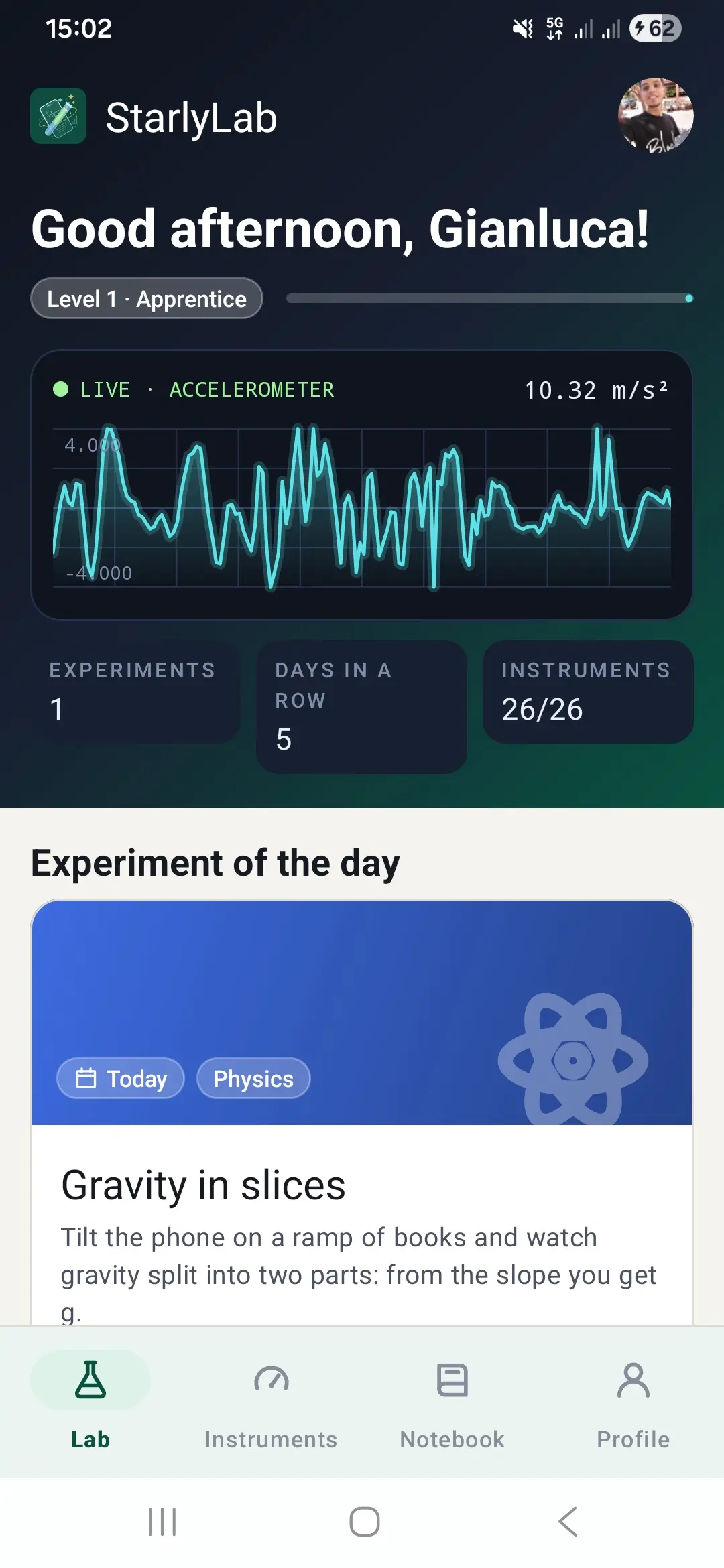
StarlyLab turns the sensors already in your pocket (accelerometer, gyroscope, magnetometer, microphone, camera, light sensor and barometer) into 26 measuring instruments, with a lab notebook that guides you step by step through the scientific method.
A real laboratory, built from your phone's sensors
StarlyLab is a free Android app for doing real science with a smartphone. Developed by Starlyware, an independent studio based in Chieti, Italy, it is made for high school and university students, teachers, makers and science enthusiasts who want to measure, test hypotheses and learn the scientific method by doing.
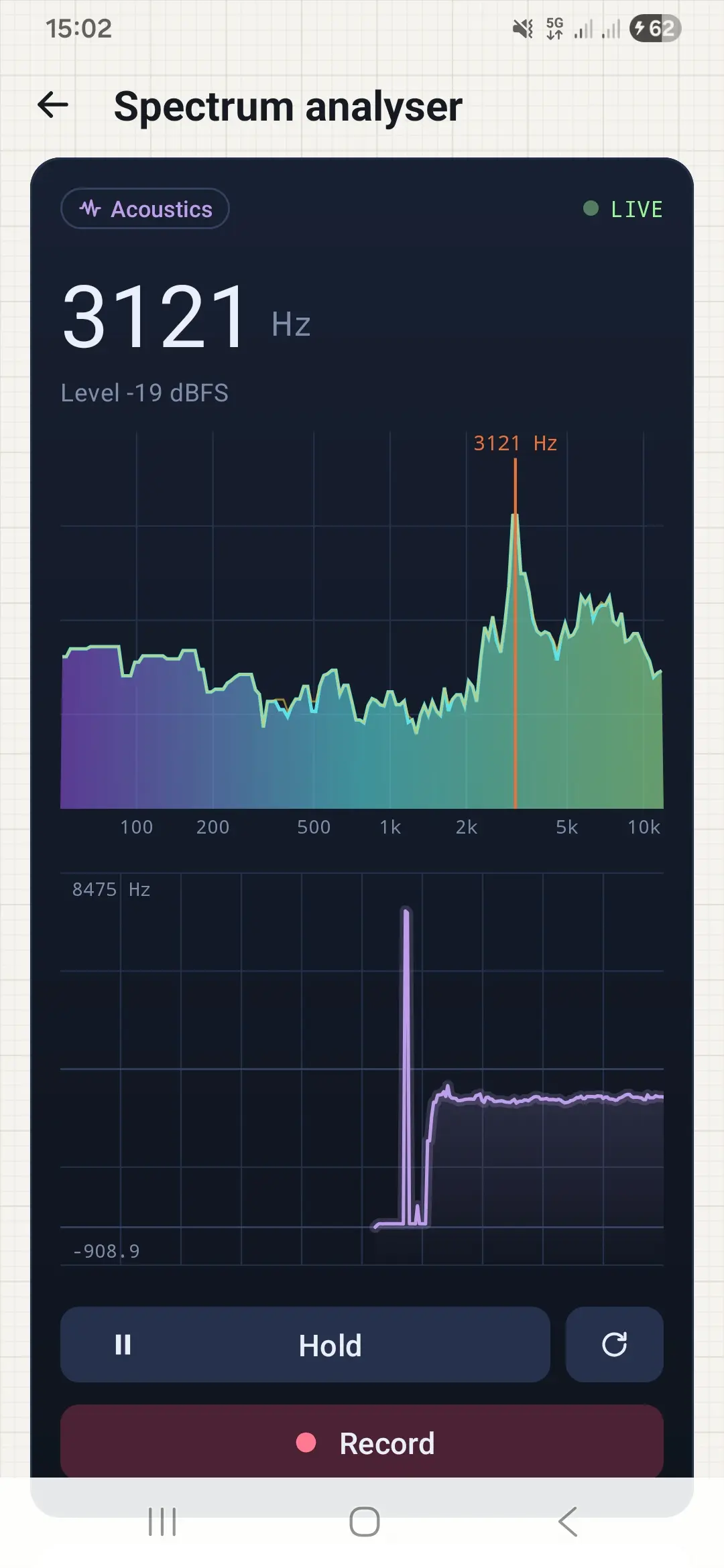
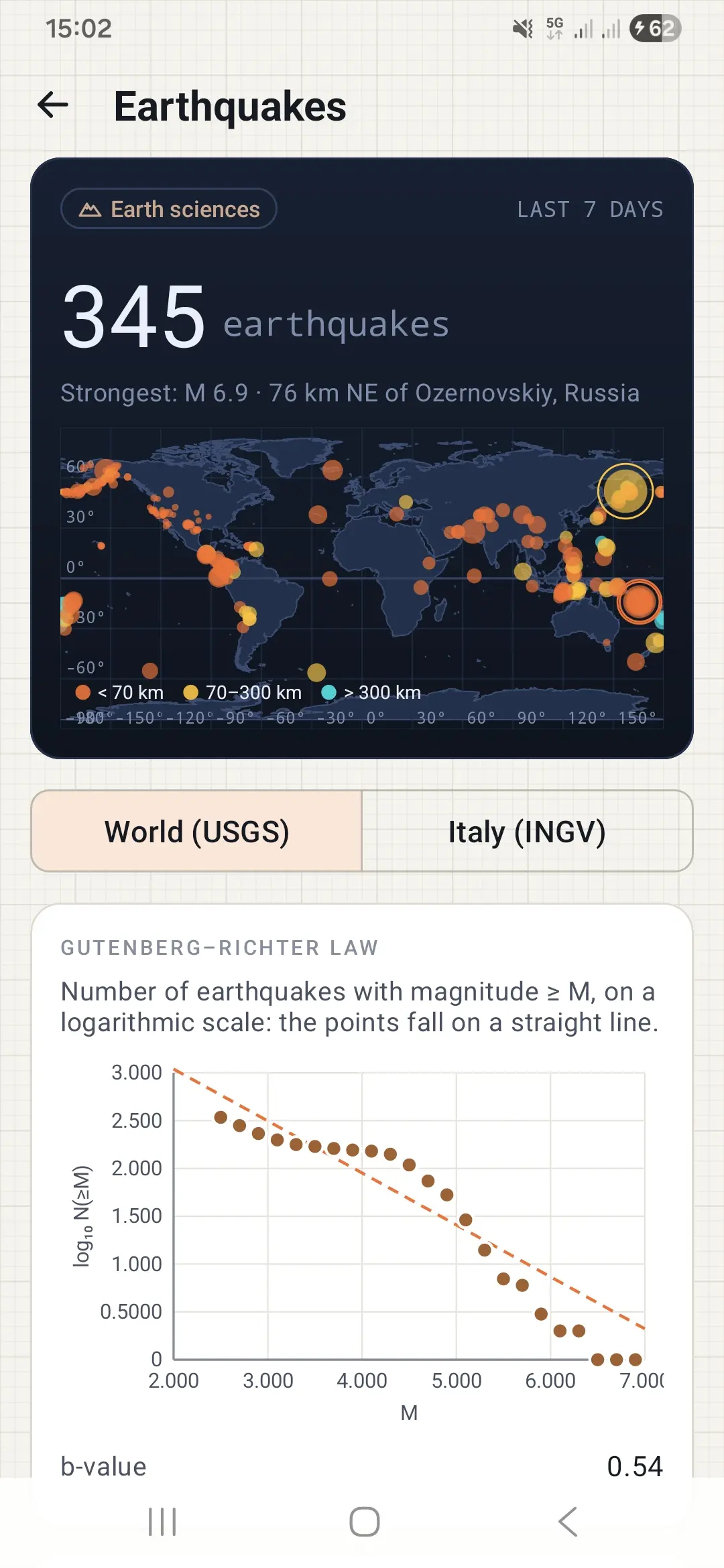
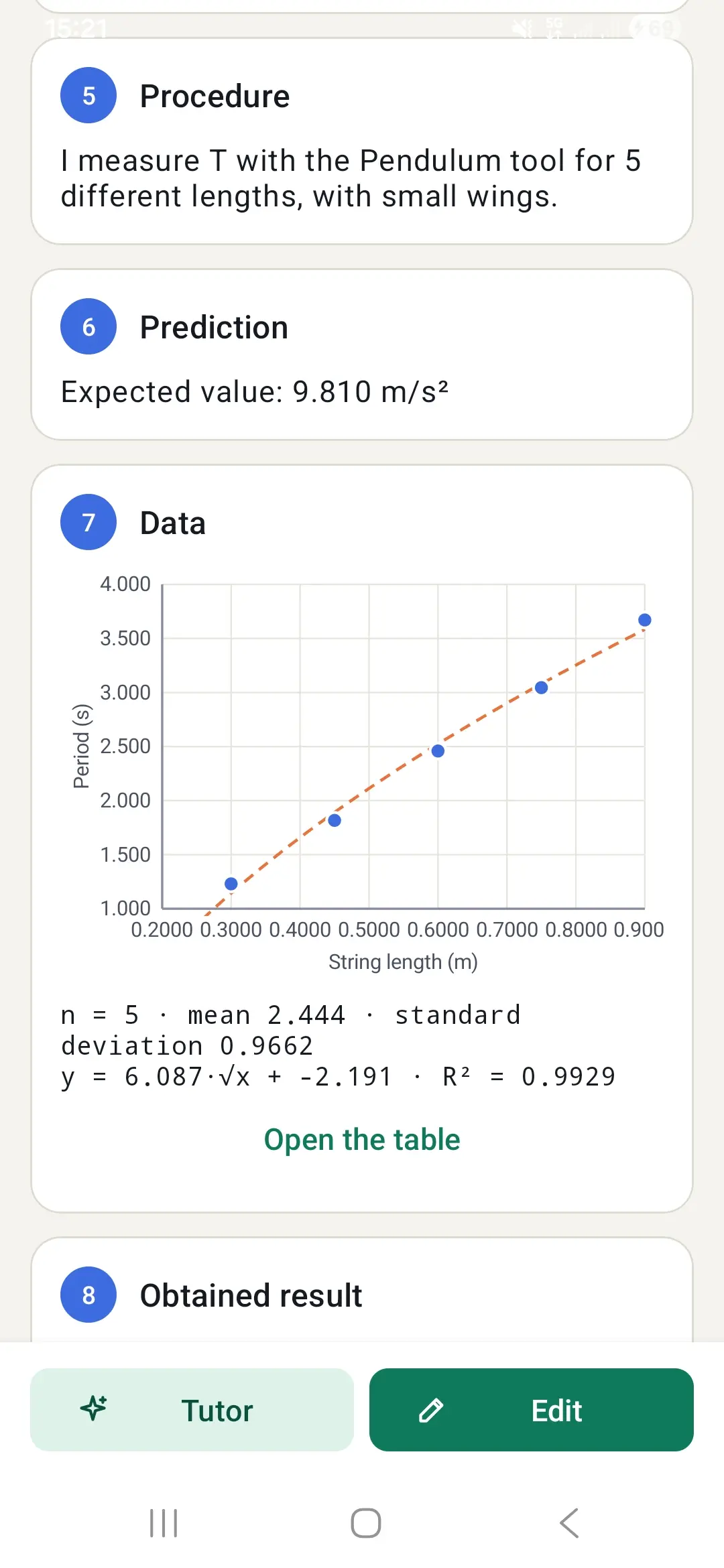
Its 26 instruments are organized on 8 benches: physics, acoustics, light and colour, Earth sciences, weather, biology, chemistry and astronomy. Measure g with a pendulum, see the harmonics of a whistle on the spectrum analyser, check the absorbance of a solution with the colorimeter, follow this week's earthquakes live or track the International Space Station in real time.
Every experiment is a page of the lab notebook in 10 steps: question, hypothesis, variables, materials, procedure, prediction, data, result, conclusion and improvements. Record data from the instruments, write measurements in a table, see the graph with the best-fit line and the error from the expected value, then export a PDF report or the data as CSV.
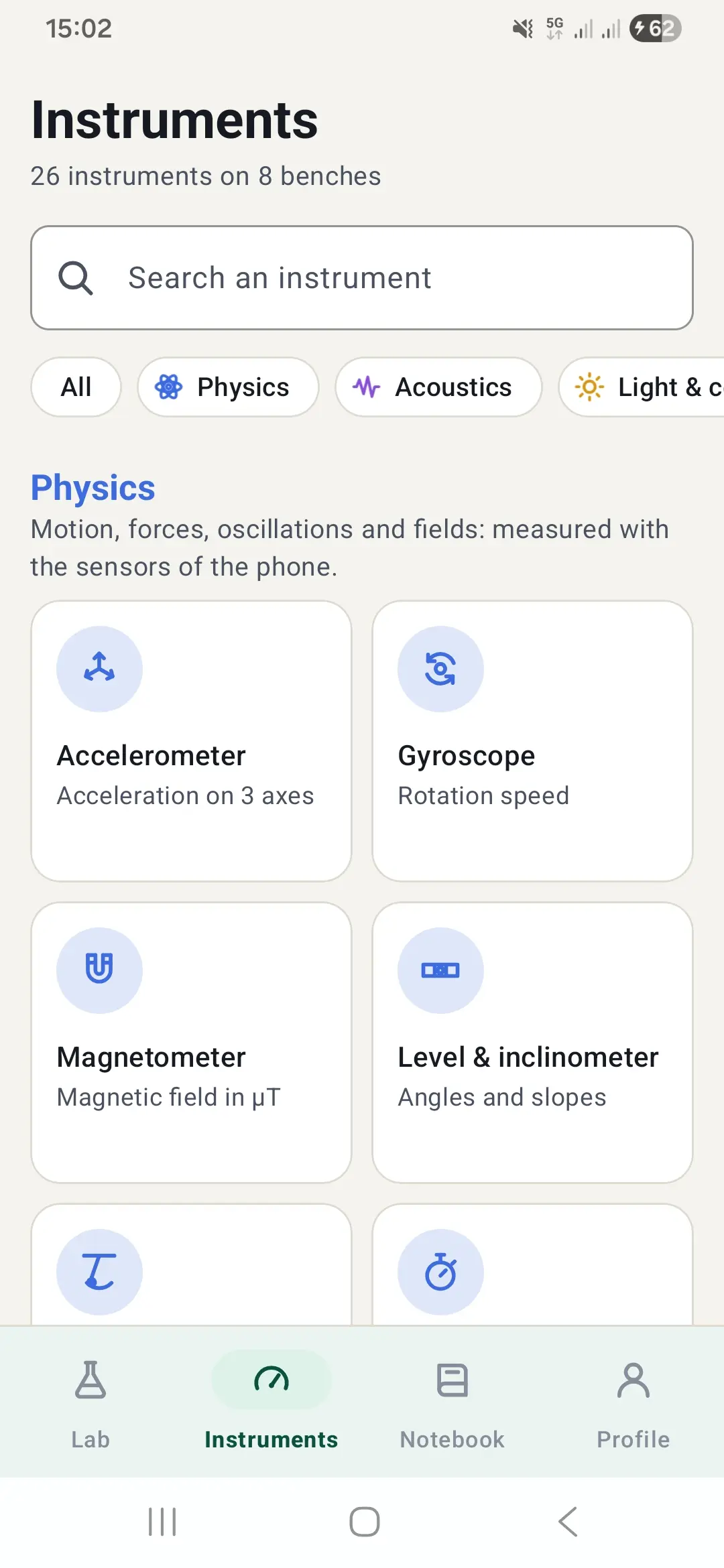
26 instruments on 8 lab benches
Every bench of a school laboratory, plus a notebook that keeps your experiments organized.
Physics
Accelerometer, gyroscope, magnetometer, level and inclinometer, a pendulum to measure g and a stopwatch started by a sound.
Acoustics
Sound level meter, spectrum analyser (FFT), tuner and tone generator.
Light and colour
Light meter and colorimeter with absorbance, to explore the Beer-Lambert law.
Earth sciences
Geological compass (dip and dip direction), geological time, live earthquakes of the week and mineral identification with the Mohs scale.
Weather
Barometer and altimeter, dew point and cloud base.
Biology
Heart rate with the camera and flash, and a reaction time test.
Chemistry
Periodic table of the 118 elements, molar mass and dilution calculators.
Astronomy
Moon phases and the Sun, the International Space Station in real time, space weather and auroras.
Lab notebook and AI tutor
10-step pages, tables, graphs with best-fit line, PDF and CSV export, plus an optional AI tutor that helps you reason without doing the work for you.
StarlyLab at a glance
Science, step by step
Ask a question
Pick a guided experiment or start your own page, then write your hypothesis and prediction before measuring.
Measure with your phone
Record data from the instruments or type your measurements into the table.
Analyze and conclude
Compare the result with the expected value on the graph, write your conclusion and export a PDF report or CSV.
Your notebook stays yours
- StarlyLab works without an account and mostly offline.
- Experiments, measurements and photos stay on your phone, with backups to the private folder of your Google Drive or to a file.
- The camera and the microphone are used only to measure: no photo or audio is saved or sent.
- The app is free and contains ads; an optional purchase supports the developer and unlocks the Supporter badge.
- Phone sensors are not certified instruments, and the heart rate is an educational experiment, not a medical device.
Frequently asked questions about StarlyLab
Turn your phone into a lab
Download StarlyLab for free and start your first experiment in a minute.
Other apps by Starlyware
Science and nature apps for Android, made by an independent developer.